
by Miriam Diamond, University of Toronto, Canada, IPCP Vice Chair and Martin Scheringer, ETH Zurich, Switzerland; Masaryk University, Czech Republic; IPCP Chair
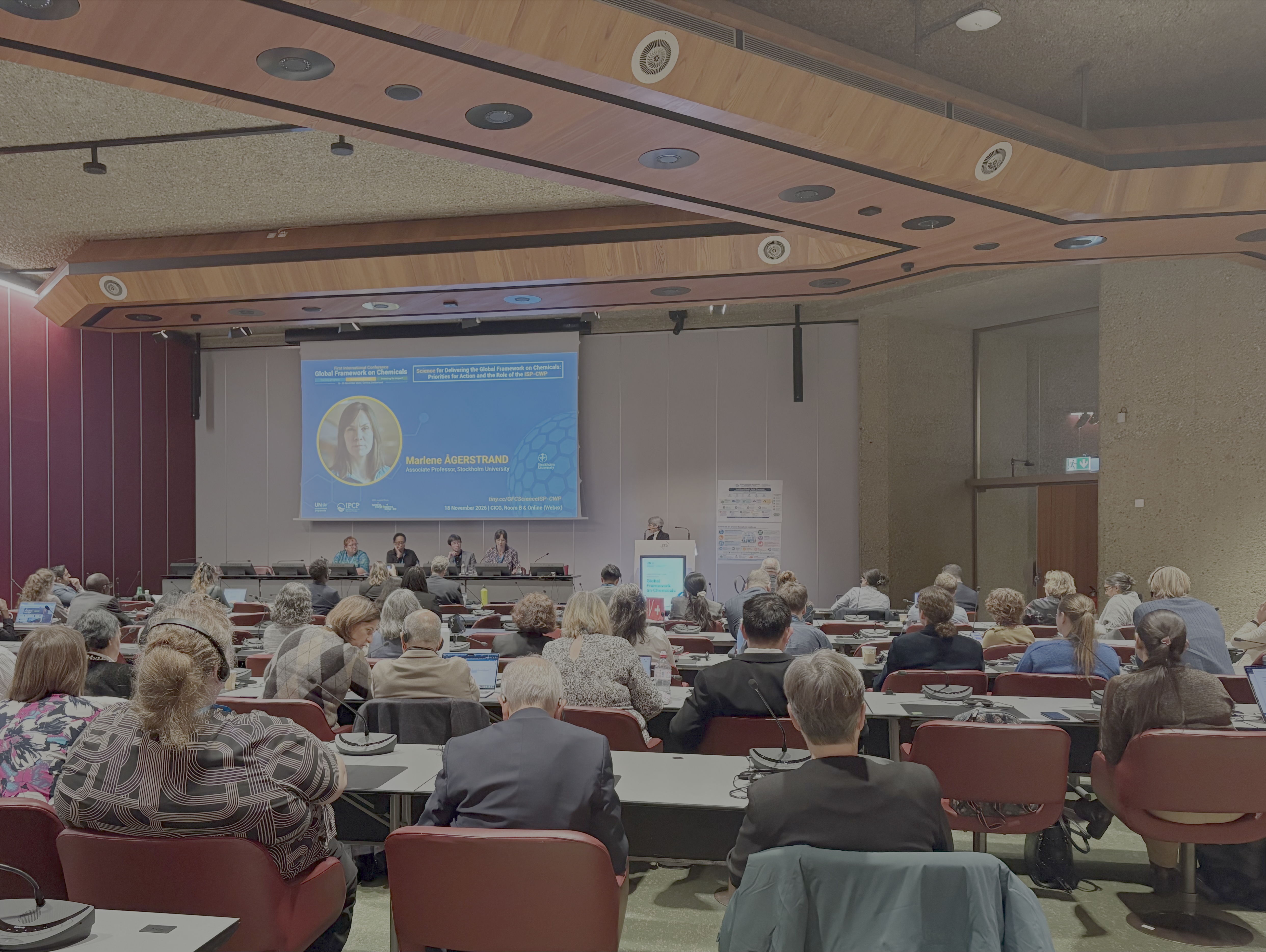
The first International Conference of the Global Framework on Chemicals (GFC) was a marketplace of experiences, ideas and aspirations. This marketplace, however, included widely different realities. One was the surreal reality of negotiators stuck in endless and seemingly futile debates on the most elemental issues. What made this reality so difficult was the tortuous negotiations among government and stakeholder delegates even though the GFC is a voluntary, multi-stakeholder agreement – none of the decisions that were made are legally binding! This added to the pain of hearing some countries disagree on whether the GFC should extend its efforts to reducing exposure to highly toxic lead beyond lead in paint and adopting an indicator of progress such as the number of countries with legislation “to manage industrial and consumer chemicals”.
The other reality was the invigorating and enthusiastic conversations amongst delegates highly committed to broad goals of the GFC. These conversations included giving voice to the frustrations of people on the ground confronted by immediate issues of chemical poisoning. Conversations took place in side-events, project meetings and in the corridors during the five-day long meeting. Some led to advancing projects in low-resourced settings, for example to reduce the use of hazardous chemicals in supply chains and to create new, circular supply chains using waste materials. Other conversations connected people working to eliminate the use of highly hazardous pesticides that continues in low-resourced settings, despite being a long-recognized issue of concern and no consensus among delegates to eliminate their production and use. But we would be remiss not to note that while such productive conversations were happening, others occurred behind closed doors involving industry lobbying aimed at countries and UN organizations.
A highlight of the meeting was the release of the 2026 UNEP and WHO report on Endocrine-Disrupting Chemicals (EDCs) (https://wedocs.unep.org/items/30aed16d-b89c-433b-8d4a-587019ea55a3). The report has already garnered a lot of attention and interest from media around the world. The report was assembled over two years under UNEP and the WHO and constitutes an authoritative statement of the prevalence and impacts of EDCs. The report underscores that no one can avoid exposure to EDCs and the costs of impacts are high. The report is intended to move the dial on action for controlling EDCs to avoid these high impacts. In addition to bringing new science to the fore, we applaud the report because its publication reflects the power of multilateralism as the report is an outcome of the UN system as an embodiment of multilateralism.
We also applaud the efforts and determination of the Chemicals and Waste Youth Platform, of which over 90 delegates attended, to advance action on children’s health. The issue of children’s health was proposed to the plenary as a new issue of concern but was not adopted by the GFC voting delegates. On the positive side, progress was made in increasing the visibility of this critical issue and moving it towards action. In the end, the positive forces left the meeting exhausted but buoyed by the energy gained coming from the dedicated and prolonged commitment to making the world safer.
—
Reports prepared by the International Institute for Sustainable Development, Earth Negotiations Bulletin are available at:
https://enb.iisd.org/global-framework-chemicals-international-conference-gfc-ig1-summary