
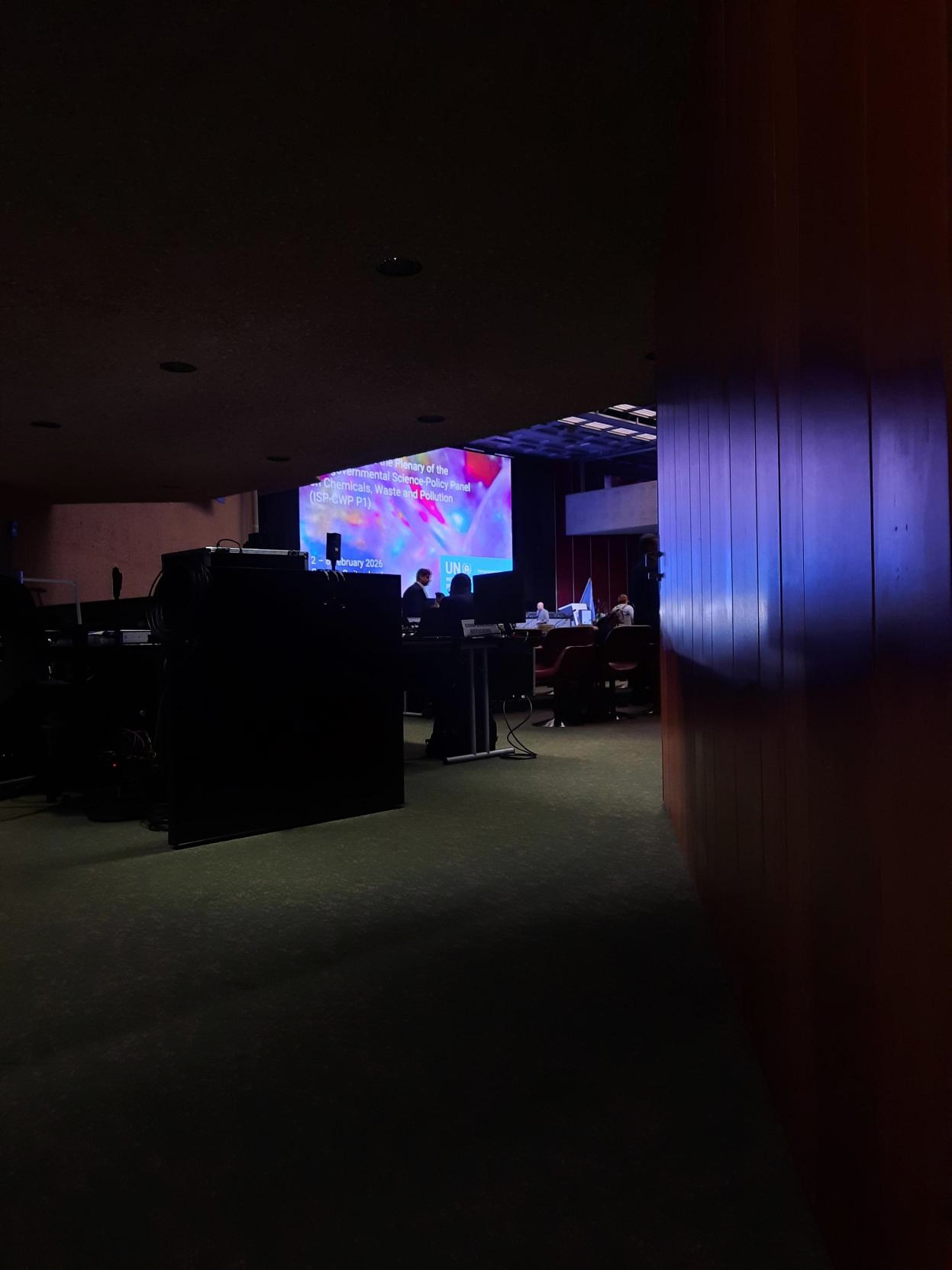
The first session of the Plenary of the Intergovernmental Science-Policy Panel on Chemicals, Waste and Pollution (ISP-CWP P1) is taking place in Geneva, Switzerland on 2-6 February 2026. The IPCP delegation includes Gabriel Sigmund and Ipek Imamoglu who are also providing daily meeting summaries. Policy briefs prepared by the IPCP as inputs to the process are available here. Other IPCP board members in attendance include Noriyuki Suzuki as a member of the delegation from Japan and Miriam Diamond as the Chemicals & Waste member of the Scientific and Technical Advisory Panel of the Global Environment Facility.
Day 3 – A Wormhole of Hope
After a short night’ sleep, we gathered this morning with our colleagues in the windowless stakeholder meeting room to discuss how we – as a group – could support the process in the Plenary and the Contact Groups. We argued over if, when, and how interventions from our side may be useful in the very difficult atmosphere of the negotiations. In the middle of our stakeholder deliberations, the Chair of the Panel, Osvaldo Alvarez Pérez took time out of his schedule to visit us and engage with stakeholder needs. In doing so, he confirmed what many of us were feeling: bilateral interactions with individual delegations may be the most effective avenue for us to support the process towards a desirable finalization of the Rules of Procedure (RoP). Chair Alvarez Pére also invited us to speak up in the Plenary when an opening for a meaningful engagement emerges.
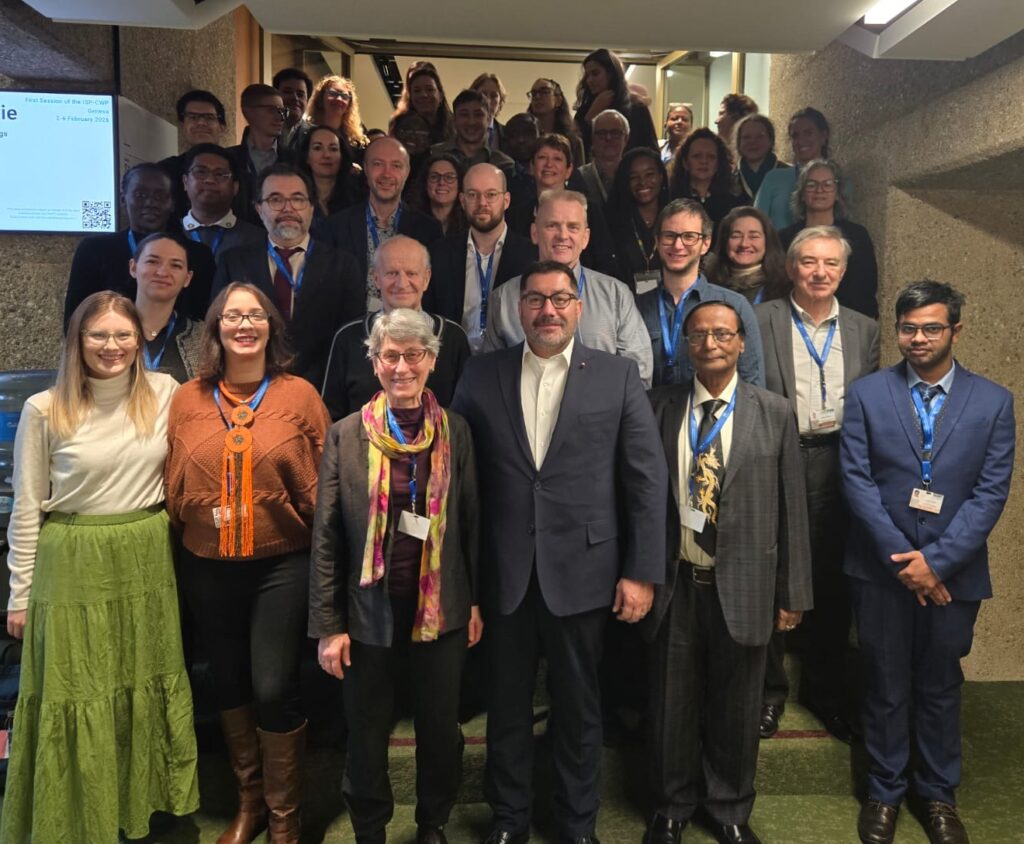
Following a group picture of the stakeholder group with Chair Alvarez Pérez, we proceeded to the Plenary session to continue where we left off last night: at the event horizon of a black hole, time standing still. Tensions rose during the session. At one point “Is there a point of order here?” was asked by a delegate, with a swift reply by the Chair : “There is no point of order as there are no rules!” Later, one delegate literally pleaded to the room not to stall progress. He argued that many left a warmer and more comfortable climate to join the negotiations with cold and rainy weather in Geneva. How could they justify this sacrifice without returning home with substantial progress? Unfortunately, this great message did not fully get across, with delegates from the Cardassian Union escalating tactics of delay and exhaustion to new levels throughout the day.…
Just when we were about to lose hope, our Plenary space shuttle stumbled into a wormhole: almost out of nowhere, Bureau members for four out of the five UN regions were elected by acclamation (all except for the Eastern European group, where there was no agreement on candidates). The confirmed Bureau members are: Democratic Republic of Congo, Kenya, China, Saudi Arabia, Mexico, Chile (Chair), Belgium, and the United Kingdom (Rapporteur). The tenure of both the Chair and the Bureau were agreed as two years, with a clause relating to any potential changes on terms in the RoP. Together with a resounding applause in the plenary, a fresh breeze of progress was felt: The significance of establishing the Bureau is that the Panel will have functional leadership beyond the Chair alone and could direct intersessional work with the secretariat. Thus, the Panel could become operational somehow… The last intervention before the lunch break was by an Indigenous Peoples delegate, who stated their expectations from the Panel, such as their own seats in the Interdisciplinary Expert Committee and an Indigenous Peoples Advisory Body.
Alas, following the lunch break, the sentiment of advancement did not last long. As is the nature of wormholes, they are not very stable, and so we were catapulted back into an almost immobile state, locked in time and space, back in the exhausting procedural dynamics of the previous days. To increase the chances of success, a Cluster of Rules was identified and split to work in parallel Contact Groups on various parts of the RoP.
Particularly contested exchanges related to the admission and participation of Observers; interventions were made on the unprecedented requirement of repetitive subsequent applications for Observers to participate in the Panel, which prompted an intervention by one of the Observers pointing out the highly unique and inappropriate nature of this. The same country delegate proposed adding “subject to no objection by any members of the plenary” for participation of Observers in the sessions of any meeting of the plenary. This was almost unanimously rejected but was left unresolved. By the afternoon, the deliberations of this week were referred to as the most difficult of the last two decades of the delegate’s experience, indicating the extraordinary road blocks that have been erected during the “negotiations”. Some progress was made in the session after dinner, where a majority of the rules on decision making were agreed upon. There will be a stocktaking plenary on Day 4 to see the progress on RoP.
So here we are, sitting in our stakeholder seats at the back of a Plenary spacecraft moving forward at a glacial speed. Still, we ARE moving forward and thus remain ever hopeful.
Policy briefs and other materials prepared by the IPCP as inputs to the process are available at: https://www.ipcp.ch/policy-briefs
https://www.ipcp.ch/publications
Longer daily reports prepared by the International Institute for Sustainable Development, Earth Negotiations Bulletin are available at: https://enb.iisd.org/isp-cwp-p1-intergovernmental-science-policy-panel-chemicals-waste-pollution
Official UNEP website: https://www.unep.org/isp-cwp/plenary/session-1